When the lights went out — and what stayed with me
·
·
This weekend is Earth Hour.
And Monday is International Zero Waste Day.
It’s not a coincidence worth overexplaining — but it is a pairing worth paying attention to.
One moment. One practice.
Together, they ask something more of us.
I remember the first Earth Hour in 2007.
I was working as a journalist at SBS, covering the story in Sydney. There was a sense, even before it happened, that this might be something bigger than a one-off campaign. But you never quite know until you see it.
And then — the Opera House went dark.
It’s strange what sticks with you. Not just the image (though that was powerful), but the feeling. A collective pause. Millions of people choosing, at the same time, to do something small — switch off a light — and in doing so, signal something much bigger.
It wasn’t about the electricity saved in that hour. It was about attention. Intention. A quiet kind of agreement that maybe we could live differently.
Nearly two decades later, I still think about that moment.
Because in many ways, it marked the beginning of a shift — from awareness to responsibility.
From one hour to everyday choices
Earth Hour has always been symbolic. And symbols matter. They give us a way in.
But what happens after the hour ends is where things get interesting.
This is where International Zero Waste Day comes in.
It doesn’t arrive with the same spectacle. No landmarks going dark. No global countdown.
But in many ways, it asks a deeper question.
Not just can you switch something off for an hour?
But can you change how you live, day to day?
And at the heart of that question is something bigger — something we don’t talk about enough.
Consumption.
For a long time, philosophers and economists have pointed out that modern life is built around it. We work, we earn, we spend. Identity gets tied up in what we buy. Growth is measured by how much more we consume each year than the last.
It’s so normal it becomes invisible.
But days like Earth Hour and International Zero Waste Day interrupt that pattern — even if only briefly.
They create a pause in the system.
A moment where we can step back and ask:
Is this the only way?
A different kind of consumption
I don’t think the answer is to stop consuming altogether.
That’s not realistic, and it’s not how people live.
But I do think there’s another version of consumption that doesn’t get enough attention.
One that is slower.
More considered.
Less wasteful.
Where what you buy is used fully, appreciated, and doesn’t leave a long trail behind it.
That’s the space we try to sit in as a brand.
Not telling people to buy nothing — but offering something better when they do.
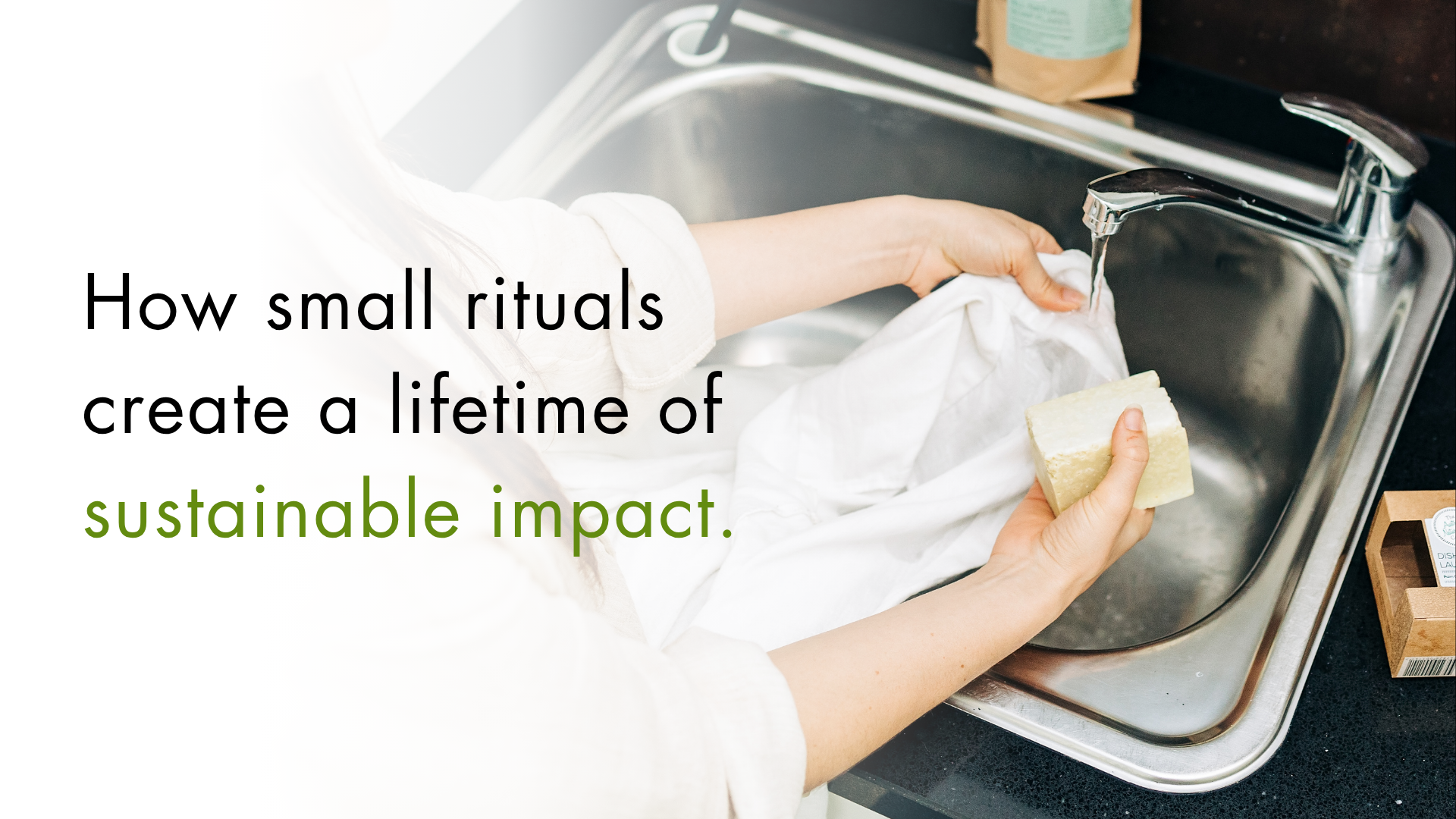
A bar of soap that replaces multiple plastic bottles.
Packaging that returns to the earth instead of sitting in landfill.
Ingredients that are simple, traceable, and don’t rely on unnecessary processing.
It’s still consumption.
But it’s a different relationship to it.
And I think that matters.
Where we sit in all of this
When I started The Australian Natural Soap Company, I wasn’t thinking in terms of global movements or awareness days.
I was thinking about something much simpler: what we put on our skin, and what that means.
But over time, it became impossible to separate that from the bigger picture.
Because the truth is, most of what we use in the bathroom — bottles, pumps, packaging, synthetic ingredients — is designed for convenience, not for longevity. Not for the planet.
And once you see it, you can’t unsee it.
The plastic doesn’t disappear.
The ingredient lists don’t get simpler.
The system doesn’t fix itself.
So we made a different choice.
Solid soap instead of liquid.
Minimal, home compostable packaging instead of plastic.
Ingredients you can recognise, sourced here in Australia.
It sounds obvious when you say it out loud. But at the time, it wasn’t the easy path.
And in many ways, it still isn’t.
Zero waste isn’t about perfection
I think this is where people get stuck.
They hear “zero waste” and imagine an all-or-nothing lifestyle. No rubbish, no mistakes, no compromises.
That’s not how it works.
It’s not about being perfect. It’s about paying attention.
It’s about noticing that one plastic bottle you buy every month… becomes twelve a year… becomes hundreds over a lifetime.
And then asking — is there another way?
Sometimes the answer is yes.
Sometimes it’s not (yet).
But the act of asking matters.
What that first Earth Hour got right
Looking back, what struck me most about that night in 2007 wasn’t just the scale — it was the simplicity.
No one was asked to overhaul their entire life.
Just to turn off a light.
And that’s still the most powerful entry point.
Because real change rarely starts with grand gestures.
It starts small.
A bar of soap instead of a bottle.
A refill instead of a replacement.
A moment of hesitation before adding something to the trolley.
The work is ongoing
If I’m honest, I don’t think we’ve “solved” anything.
We’re still part of a system that creates waste. We still make trade-offs. We’re still learning.
But I do think we’ve proven something important.
That there is demand for products that are simpler, more thoughtful, and less wasteful.
That people are willing to change their habits when the alternative actually works.
And that businesses have a responsibility to make those alternatives accessible.
Not perfect. Just better.
A quiet kind of optimism
There’s a lot of noise around sustainability.
Big claims. Big promises. A lot of greenwashing.
I find myself drawn back to that moment in Sydney — the Opera House in darkness — because it was the opposite of all that.
It was quiet.
And it felt real.
That’s still what I’m interested in.
Not dramatic change for the sake of optics.
But steady, grounded shifts in how we live.
The kind that don’t make headlines — but add up over time.
If you’re taking part
If you switch off your lights for Earth Hour, take a moment.
Not just to sit in the dark — but to think about what comes next.
One small change you can carry forward.
Maybe it’s your bathroom.
Maybe it’s how you shop.
Maybe it’s simply noticing what you throw away.
You don’t need to do everything.
Just something.
That’s how it starts.
Soapy hugs
Emma xx
Emma xx