The Difference Between Perfume and Real Scent
When I was a teenager, I read Patrick Süskind’s Perfume.
I don’t remember exactly why I picked it up — probably because it felt a little dark and grown-up — but I remember how much it unsettled me. Not because it was about fragrance, but because it wasn’t really about fragrance at all. It was about obsession. Control. The idea that scent could bypass reason and go straight to something more primitive.
Years later, I make soap for a living. And I still think about that book.
Because once you understand how powerful scent really is, it’s impossible to treat it as just another ingredient.
One of the most common questions we’re asked is a simple one:
“Are your soaps scented?”
The answer is yes — many of them are.
But the question itself reveals how narrowly we’ve been taught to think about scent.
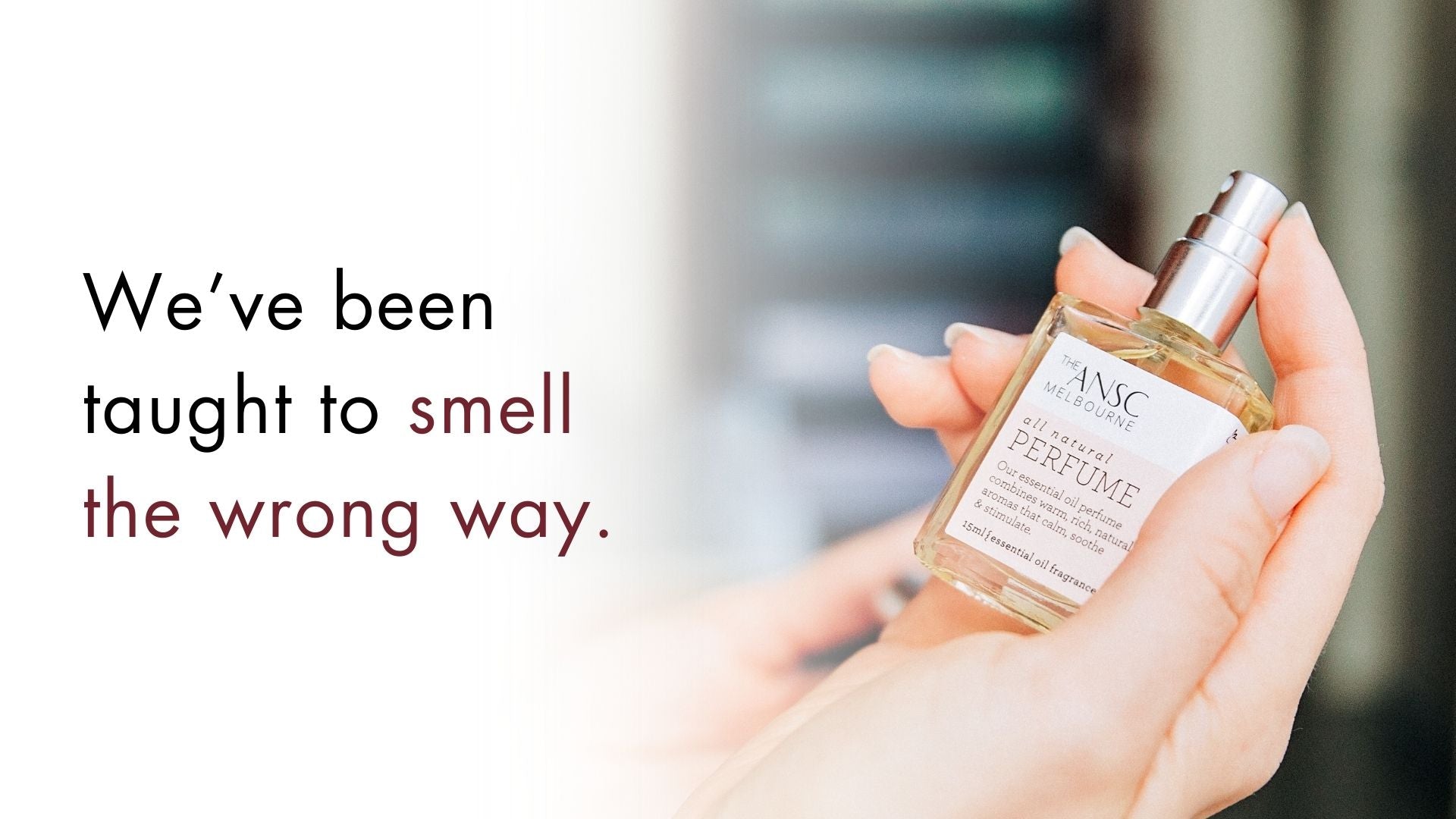
When most people think of scent, they think of perfume.
Bold. Lingering. Designed to be noticed.
Modern perfume has taught us that scent should perform — project, announce itself, leave a trail. Louder is often mistaken for better. Strength is confused with quality.
That expectation has quietly shaped how we think about all scented products, even the ones we use every day.
Not all scent is meant to perform
When you spend years working with real essential oils, your relationship with scent changes.
You start to notice how artificial fragrance behaves. How it cuts through a room. How sharp and chemical it can smell. How it demands attention rather than inviting closeness.
Pure essential oils behave very differently.
They come from real plants. They’re complex and layered. They shift subtly with warmth, water and skin. They don’t dominate a space — they sit closer to the body.
Calling both essential oils and synthetic fragrance “scented” is a bit like calling fast food and home cooking the same thing because they’re both meals. Technically true. Practically meaningless.
One is designed to perform.
The other is designed to belong.
Scent is memory — and memory is intimate
Scent is the only sense that bypasses logic entirely. It goes straight to memory and emotion.
A place you haven’t been in years.
A person you didn’t expect to think about.
A moment that arrives without warning.
This is why real scent feels quieter and more intimate. It doesn’t try to impress. It doesn’t announce itself. It sits close, unfolding slowly, becoming part of the background of your life.
Artificial fragrance often does the opposite. It creates sensation without depth — attention without intimacy.
How we think about our perfumes and our soaps
This is exactly how we approach both our perfumes and the essential oils we use in our soaps.
Everything we make is scented using pure essential oils, chosen for how they sit close to the body and evolve gently over time. They’re not designed to fill a room or leave a trail behind you.
They’re more companion than performance.
They’re meant to feel personal — like something that becomes part of your day, rather than something you put on top of it.
Why this matters for everyday rituals
Most of us are exposed to scent constantly. Not just occasionally, like perfume — but daily. On our hands. Our face. Our body.
So the real question isn’t whether something smells nice.
It’s whether it makes sense to live with.
Many people already know, instinctively, when a scent feels like too much. Headaches. Overwhelm. That urge to wash it off. Our bodies often understand before our language does.
Real scent tends to work differently. It stays closer. It’s familiar rather than forceful. And over time, it becomes part of how a place, a person, or a moment is remembered.
A quiet nod to the season of romance
Valentine’s Day often celebrates intensity. Big gestures. Big declarations.
But intimacy rarely works that way.
It lives in proximity. In repetition. In shared spaces and everyday rituals. And scent, when it’s real, plays a quiet role in that — not as a performance, but as presence.
So yes — many of our soaps are scented.
And so are our perfumes.
But they’re scented with pure essential oils, chosen with intention — because scent doesn’t need to shout to be powerful.
Sometimes, the scents that stay with us longest are the ones that sit closest of all.