One ingredient. Here's why that's exactly right.
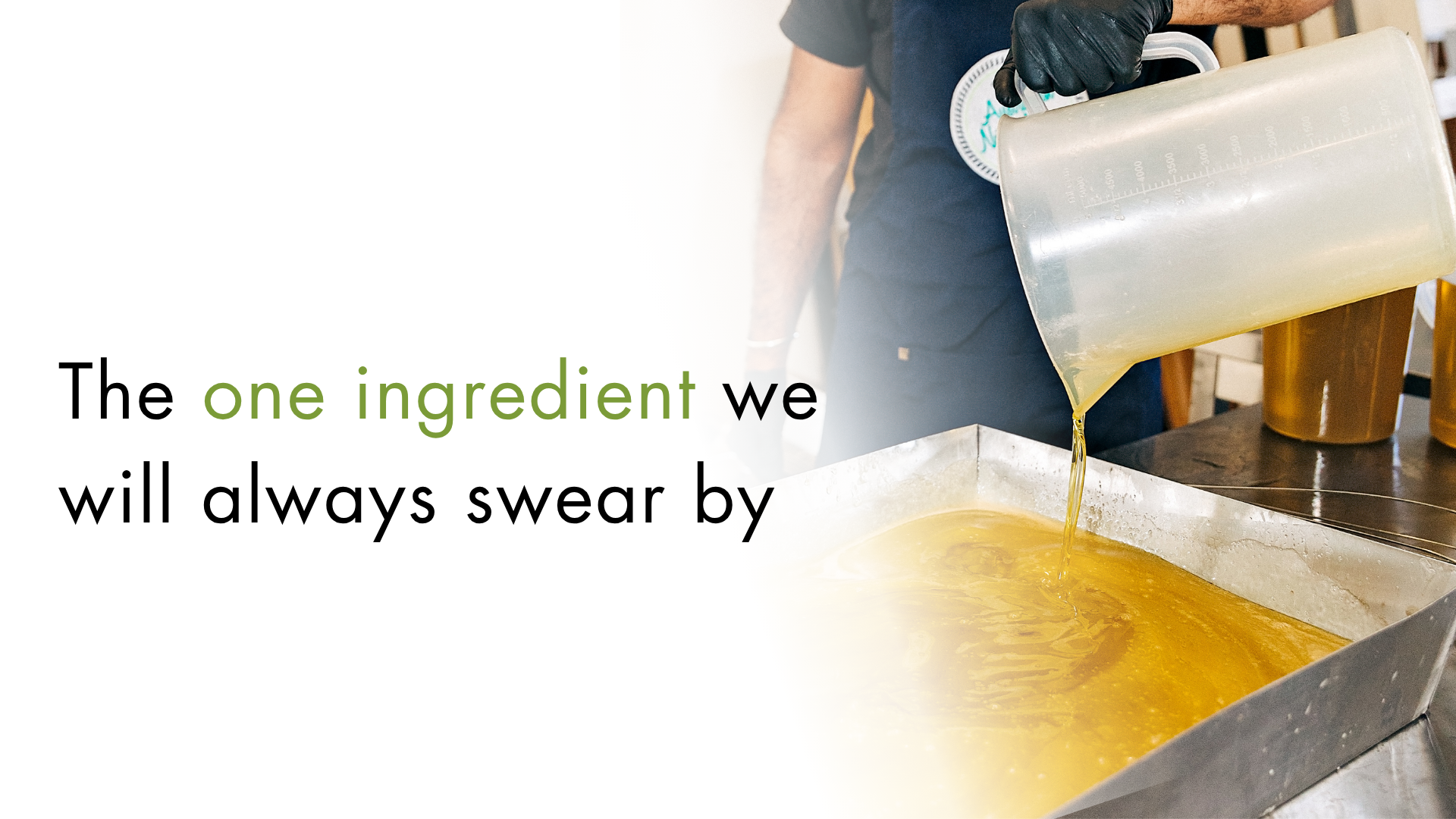
After thirteen years of making soap, I still love this question. Not because it's simple — it isn't — but because the answer opens up something most people have never been taught about how soap actually works.
The question is usually some version of: "How can you list one ingredient if soap needs oil, water, and lye? That's three." It's a fair thing to wonder. So let me walk you through what's actually happening in the bar.
Here's what actually happens
Saponification — the chemical reaction that turns oil, water, and lye into soap — is a complete reaction. Those three inputs go in and they don't come out the other side. The lye is consumed. The water evaporates over the 4–6 week cure. What remains is a single compound: Sodium Olivate.
Not three things. One thing.
The standard nobody explains
This isn't a creative interpretation of our label. It's the international standard. INCI — the system that governs ingredient labelling for every cosmetic and personal care product on the planet — names saponified olive oil as Sodium Olivate. You list what's in the finished product, not what you used to make it.
Listing lye on a fully cured bar of soap would be like listing yeast on a loaf of bread. The process consumed it. It's gone.
And a bar with residual lye isn't soap. It's a mistake. The entire point of the 4–6 week cure is to ensure every molecule of sodium hydroxide has been converted. That's not drying time. That's chemistry finishing.
The part the industry doesn't talk about
When olive oil saponifies, the reaction produces something alongside Sodium Olivate: glycerol. A natural humectant — the thing that actually draws moisture into your skin. Commercial soap manufacturers extract it out and sell it separately. It's valuable, there's a whole market for it, and stripping it from the bar is just good business if margin is what you're after.
We leave it in. Every batch, every bar, every time.
That retained glycerol is a big part of why this soap behaves the way it does on skin. It's not just cleaning — it's conditioning. And it means our one-ingredient label isn't a shortcut. It's proof that the reaction went to completion, the cure did its job, and nothing got taken out for someone else's profit.
One ingredient. Thirteen years of chemistry says so.
Soapy hugs,
Emma xx