The Myth of Perfect Skin
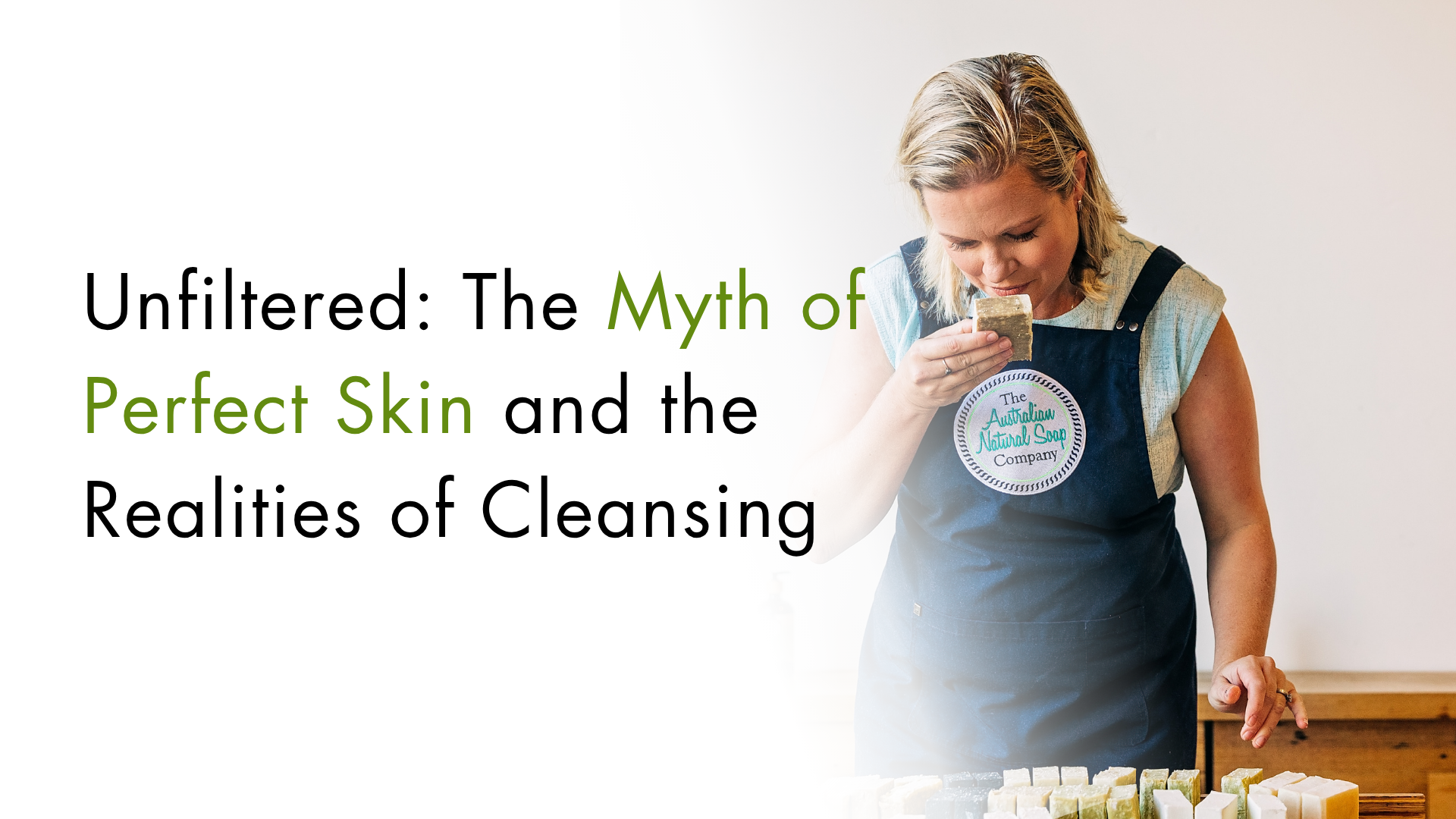
My face goes red when I wash it. I'm fine with that.
I get comments on Instagram and Facebook about my skin. Specifically, about the redness. The gist is usually the same: if your soap was any good, your face wouldn't look like that. Sometimes it's said kindly. Sometimes less so. Either way, it lands.
I'm not going to pretend it doesn't sting a little. I've been making this soap for over a decade. I use it on my own face every single day. So yes, when someone looks at me mid-wash and concludes I'm a walking advertisement for someone else's product, I notice.
But here's what's actually happening, because I think it's worth explaining properly.
What you're seeing is a cleanser doing its job
Any cleanser — bar soap, face wash, micellar water, all of it — increases circulation to the skin. That flush is blood moving to the surface. It's your skin responding to warmth, water, and being actively cleansed. It's completely normal and it's completely temporary.
The reason it looks alarming on camera is that we've all been sold an image of "clean skin" that was never real. The flawless, poreless, even-toned face you see in skincare advertising is foundation, powder, ring lighting, and editing. It is not what clean skin looks like on a real woman in natural light.
What I show is real skin. Doing real things.
The filming reality
There's something else worth knowing. When I film content — and we film on an iPhone, in the warehouse, with no makeup artist standing by — I am washing my face multiple times. Multiple takes. Which means I'm using considerably more product than I would in a normal morning routine.
What that actually does is function more like a facial than a daily cleanse. The circulation, the oils working into the skin, the extended contact time — the flush is more pronounced, but so is the result. On filming days, my skin feels extraordinary by mid-morning. I follow with a few drops of macadamia oil and that's it. No serum. No moisturiser on top. Just skin that's been properly looked after.
The redness is gone within twenty minutes. What stays is the good part.
My skin has a complicated history
The honest answer to why I'm unbothered by the redness is that I've had a much longer and more complicated relationship with my skin than most people realise.
When I was thirteen, I had bad acne. Bad enough that I went to the doctor. I was prescribed a topical retinoid, and I was told clearly not to go in the sun while using it. Topical retinoids are photosensitising — sun exposure while using them is a real risk, and the warning was legitimate.
I was thirteen. There was a sports day. There were no compulsory hats, no compulsory sunscreen — this was a different era entirely. I went outside anyway, because of course I did, and I got badly burnt.
I'm not recounting this to be dramatic about it. I'm recounting it because it's the beginning of my actual education about skin — what it can withstand, what damages it, what it needs, and how poorly the industry has sometimes served the people it was supposed to be helping. The history of treating acne, particularly in teenage girls, is not a straightforward one. There have been serious questions raised about some of the approaches used over the decades — about photosensitivity risks that weren't communicated clearly, about treatments handed to young women without adequate information. I experienced a version of that at thirteen. It stayed with me.
Why I make what I make
I didn't start Australian Natural Soap Company because I had perfect skin and wanted to share the secret. I started it because I'd been navigating the gap between what the industry promises and what it actually delivers for most of my adult life.
Cold-pressed soap made with pure plant oils — the kind we make, cured for four to six weeks, with no synthetic detergents, no sulphates, no the-list-of-things-on-commercial-body-wash — is not a cosmetic promise. It's a return to what a bar of soap actually was before the industry decided that stripping your skin's natural barrier and selling you a moisturiser to fix it was a better business model.
I use our soap on my face every day. My skin, with its complicated history, is the evidence base I trust most. Not because I'm trying to be my own best advertisement — but because I've tried enough other things to know what works and what doesn't.
So when my face goes red on camera, I'm not embarrassed by it. I'm not scrambling to edit it out. It's skin doing what skin does. And by the time I'm done filming, a few drops of macadamia oil in, getting on with the day — it's the best my skin has felt all week.
That's the part I wish the comments could see.
Soapy hugs, Emma xx