What's Actually In Our Pink Clay
The Bar People Come Back For
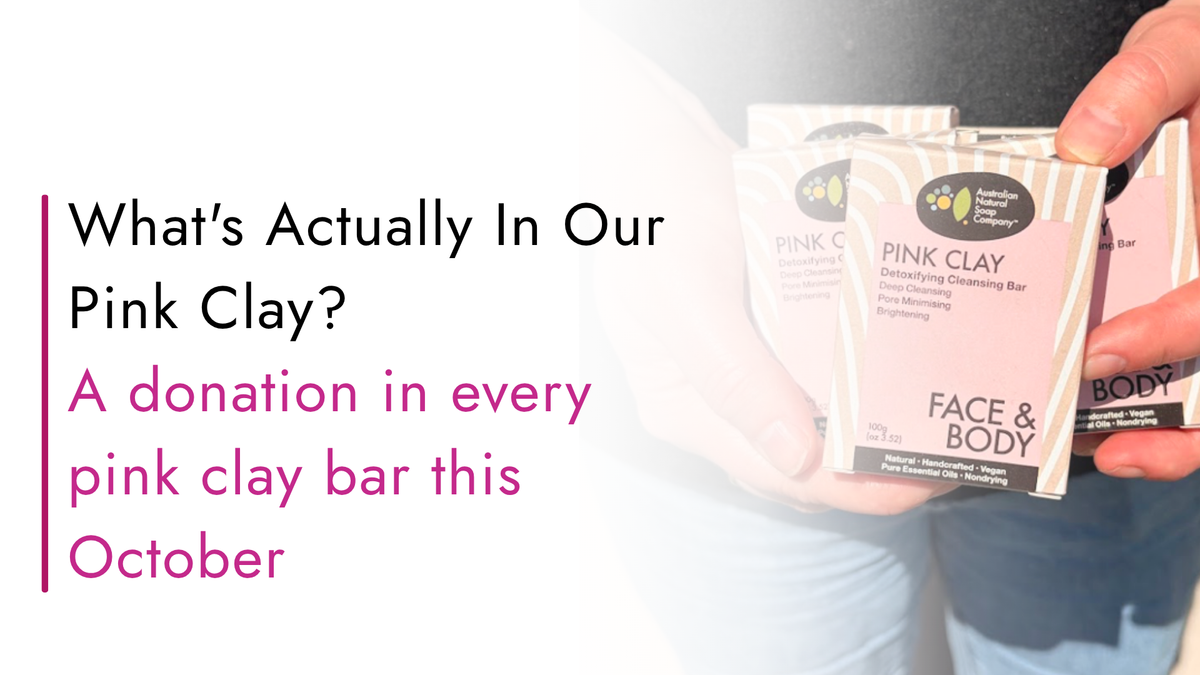
Pink Clay is our top cleanser. It has a following of its own: people who try it once and then just keep reordering it.
I understand why. I don't stick to one soap at home. I use whatever's around. But whenever it's the Pink Clay, I have the same reaction every time: oh my God, my skin feels amazing.
So when we were choosing which bar would carry a donation this month, it wasn't a hard choice.
What Pink Clay Actually Is
Most of the clay in skincare is kaolin. It's a soft white clay built from layers of silica and alumina, which gives it a fine, crumbly texture. It's also the most common clay in Australia, with deposits in every mainland state.
The pink is iron. Iron oxide is the same mineral that turns Australian earth red, and a little of it turns white kaolin pink. That's what goes into our bar: Australian kaolin and iron oxide.
What The Clay Does
Clay is good at holding on to things. In a bar of soap, that means it lifts oil and everyday grime off your skin and gives you a very gentle exfoliation every time you use it.
But clay is only half of why this bar feels the way it does. The other half is what we put around it.
Why Macadamia
Macadamia is an Australian nut, and its oil is unusual. It's around 80% monounsaturated fat, more than olive oil. And it's the richest plant source of something called palmitoleic acid, which makes up close to a fifth of the oil. Palmitoleic acid is also in the oils your own skin makes, which is why macadamia feels so at home on skin. It sinks in rather than sitting on top.
In the bar, it gives you a soft, creamy lather that's kind to sensitive skin.
Why Your Skin Doesn't Feel Tight Afterwards
Soap is what happens when oil meets lye. We superfat every soap we make. That means we deliberately add more oil than the lye can turn into soap, so there's always some oil left over in the bar that stays as oil.
So yes, it's a soap, and you rinse it off. But that extra oil doesn't all go down the drain. Some of it stays on your skin, which is why your skin feels soft rather than squeaky after you've washed.
Then there's the glycerin, and I could talk about glycerin all day. Glycerin forms naturally when soap is made. It's a humectant, which means it draws water into the outer layer of your skin and holds it there. We cold process slowly, so all of that glycerin stays in the bar, where it does the most good.
Put it together and you get clay that cleans, macadamia that's close to your skin's own oils, extra oil left in on purpose, and glycerin holding the moisture in. The scent is Himalayan cedarwood and lemongrass essential oils: earthy, a bit zesty, and not sweet at all.
It works on your face and your body (here's how to make soap your skincare routine). If your skin is dry, sensitive or getting older, this is the bar I'd point you to first.
Where Your $1 Goes
Like many people, we've had breast cancer touch our lives through people close to us.
Breast Cancer Network Australia was founded right here in Melbourne in 1998. They support Australians affected by breast cancer: a helpline (1800 500 258), information for every stage, and an online network where people going through it can talk to each other. Their work is important, and we wanted our donation to go somewhere it makes a direct difference.
Here's how it works this month:
- One Pink Clay bar: $1 to BCNA
- The five-pack: $6 to BCNA
At the end of October, we'll tell you what we raised together.