What's Actually in Your Soap?
Have you ever looked at the ingredients on the back of your soap or body wash?
Most of us don't think twice about it. We pick something that smells nice, feels good on our skin, and does the job.
But not everything we use to wash ourselves is made the same way. And once you understand what's actually doing the cleaning, the ingredient list starts to make a lot more sense.
At Australian Natural Soap Company, we make our soap from plant oils, with Australian olive oil at the centre of our range.
Here's why.
Not All Soap Is Made the Same Way
There are four common bases you'll come across in soap and body wash.
1. Tallow (animal fat)
Tallow is rendered animal fat, usually from beef or sheep. It's been used to make traditional soap for generations.
It produces a firm bar with a creamy lather. There's nothing unusual about using tallow to make soap, but because it comes from animals, it isn't an option if you're looking for a vegan bar.
If you've read Emma's post about the letter stamped on the bottom of a supermarket soap pack, this is what the T stands for.
2. Palm oil
Palm oil is another common soap-making ingredient. It helps produce a hard, long-lasting bar and contributes to the lather.
It's widely used because it's versatile and relatively inexpensive. Palm oil production can also be associated with deforestation and habitat loss, although sourcing practices vary.
We choose not to use it in our soaps.
3. Plant oils
This is where our soaps come in.
Plant oils such as olive, avocado and macadamia can all be made into soap. Each has a different fatty acid composition, which influences how the finished bar behaves.
Some contribute to hardness, others to lather, and others to the feel of the soap when you're washing.
Our preference is Australian olive oil, supported by avocado and macadamia oils across our range.
4. Synthetic detergents
Here's where things get a little different.
Many supermarket body washes use synthetic surfactants, which are cleansing ingredients designed to lift oils and dirt so they can be rinsed away with water. On a label, they're usually the long chemical names near the top of the list, such as sodium laureth sulfate.
They aren't necessarily bad ingredients. In fact, some synthetic cleansers are formulated to be very gentle.
But they're different from traditional soap, which is made by reacting fats or oils with an alkali.
For us, it comes down to what we want to make: real soap, from plant oils, with an ingredient list people can understand.
Why We Choose Australian Olive Oil
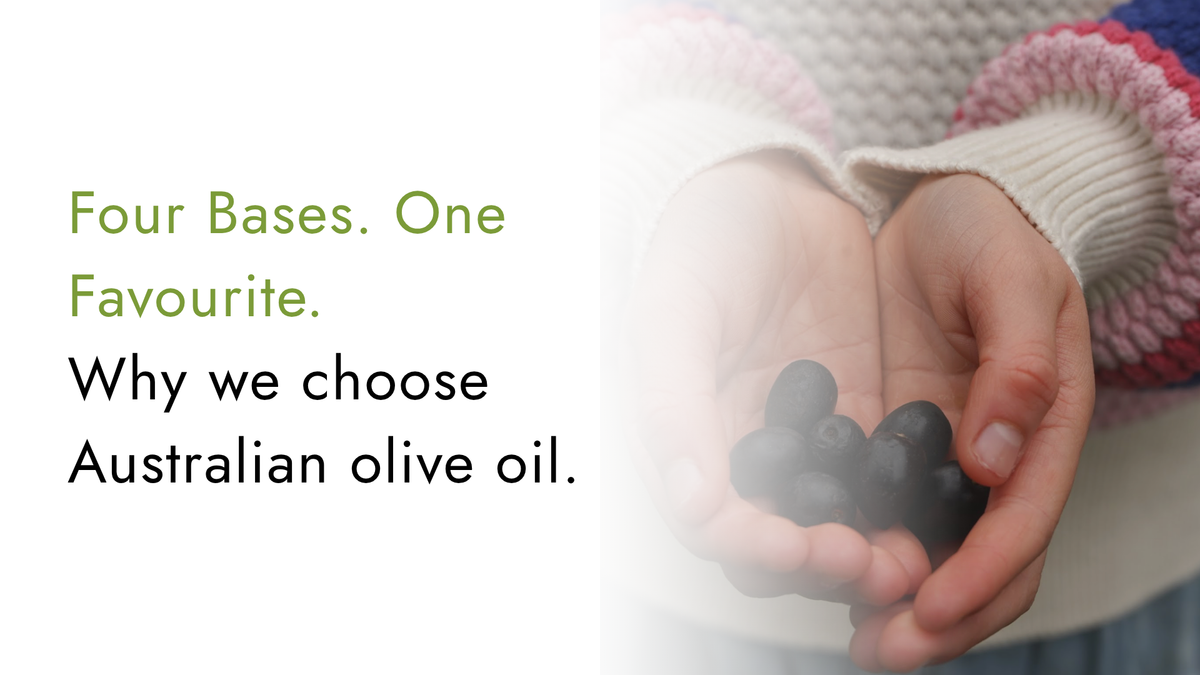
If there's one ingredient that defines our soap, it's olive oil.
Our olive oil is grown in Australia, including Western Australia and South Australia.
Olive oil has a high proportion of oleic acid, a fatty acid that shapes the character of olive oil soap.
Made into soap, it gives a fine, creamy lather rather than the big, fluffy bubbles you might associate with some other cleansers. That's something we really like about it. A good soap doesn't need enormous bubbles to clean your skin.
We believe Australian olive oil makes the best soap for skin. That's our preference as soap makers, based on the kind of bar we want to make and how we want it to feel when you use it. It isn't a claim that every other ingredient is bad. It's us choosing the one we think makes a really good soap.
What About Avocado and Macadamia Oil?
Olive oil might be our starting point, but it isn't the only oil we use.
We also use Australian avocado and macadamia oils in our range.
Avocado oil
Avocado oil has a different fatty acid profile from olive oil, including oleic and palmitic acids.
We use it as part of our plant-oil formulations to help create the finished character and feel of the bar.
Macadamia oil
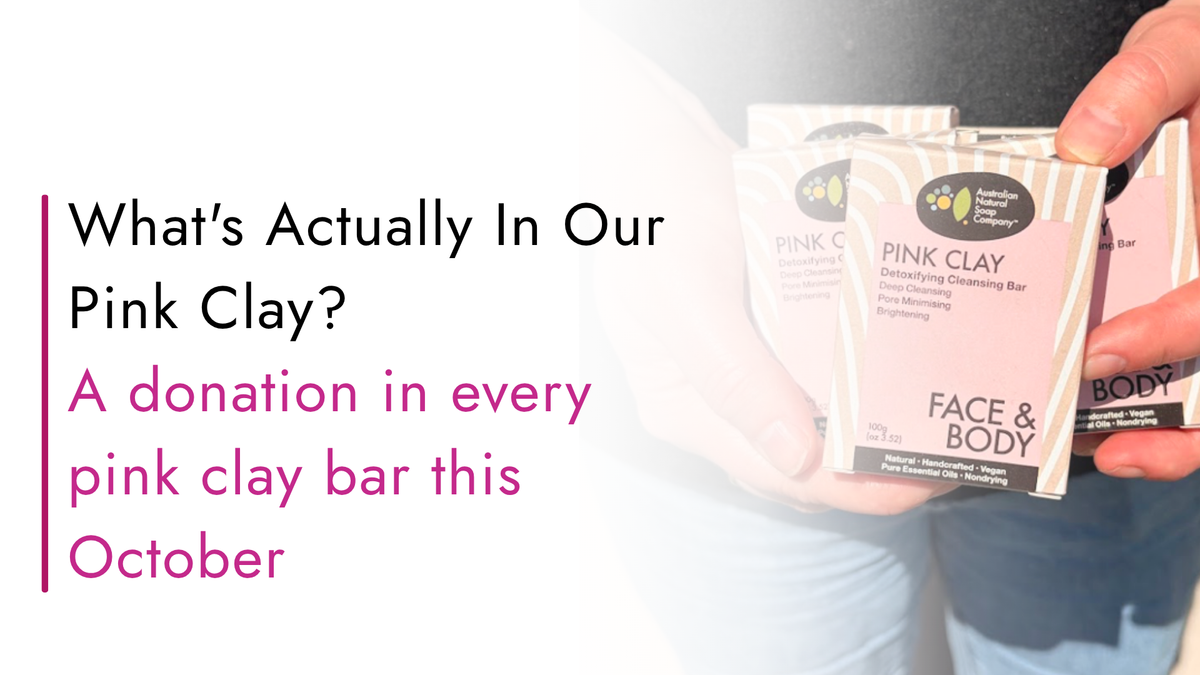
Macadamia oil contains oleic and palmitoleic acids, giving it a distinctive fatty acid composition. Emma wrote more about it in our Pink Clay post, because it's the oil that bar is built around.
It's another oil we use when formulating our soaps, contributing to the balance of oils in the recipe.
All three oils are food-grade ingredients. That doesn't mean the finished soap is edible. It isn't.
It simply means we're starting with oils that are also used in food, before turning them into soap.
So, Does the Base Really Matter?
We think it does.
The oils and fats used to make soap influence the hardness of the bar, the type of lather it produces and what it's like to wash with.
How it's made matters too. When soap is made, glycerin forms naturally alongside it. We cold process our soap slowly, so that glycerin stays in the bar.
That doesn't mean one ingredient automatically works for everyone, or that a natural ingredient is always better than a synthetic one.
But it does mean the ingredients deserve a little attention.
We want people to understand what's in the products they use every day, without needing to be a chemist to read the label.
Start With Olive Castile
If you're curious about what olive oil soap is like, our Olive Castile is a good place to start.
It's one ingredient: Australian olive oil, turned into soap. It's one of the foundations of our range, and the bar that best shows how we approach soap-making: start with the oils, keep the formulation purposeful, and let the finished soap speak for itself. When you're ready to try more, the rest of our range is built the same way.
Next time you pick up a bar or bottle, turn it around and have a look at the ingredients.
Once you know what you're looking for, there's a lot you can learn from that little list.
Real soap. Real oils.