The Letter Stamped On The Bottom Of Your Soap Box
If it ends in P, the bar inside is made of palm oil.
If it ends in T, the bar inside is made of beef fat.
Same box. Same shelf. Same name on the front. The only way to know which one you're holding is to turn it over and decode the batch stamp — and I'd bet my curing racks that not one shopper in ten thousand knows that letter is there, or what it means.
I didn't know either. And I make soap for a living.
How I Ended Up Reading 34 Soap Labels
Recently, we read the ingredient list of every under-eye mask at one of the biggest beauty stores in this country — all 43 of them. The response taught me something: people don't want to be told what to think about ingredients. They want someone to actually go and read the labels, and report back.
So this time I went to the aisle that touches more Australians than any serum ever will. The supermarket soap aisle. Thirty-four products at one of the biggest supermarkets in the country.
I had one question. It's the question I'd want answered about anything I rub on my body every day.
What is this actually made of?
All Soap Is Fat. That's Not The Scandal.
Let's get the chemistry straight first, because the industry relies on you not knowing it.
Soap is saponified fat or oil. Fat, water and lye go in; the lye is used up transforming the fat; what comes out is soap and its own natural glycerin. That's the whole recipe. It's been the whole recipe for about five thousand years.
So every bar in that aisle is made of some fat or other. The question — the only question, really — is whose fat, and do they tell you?
Here's what the labels say.
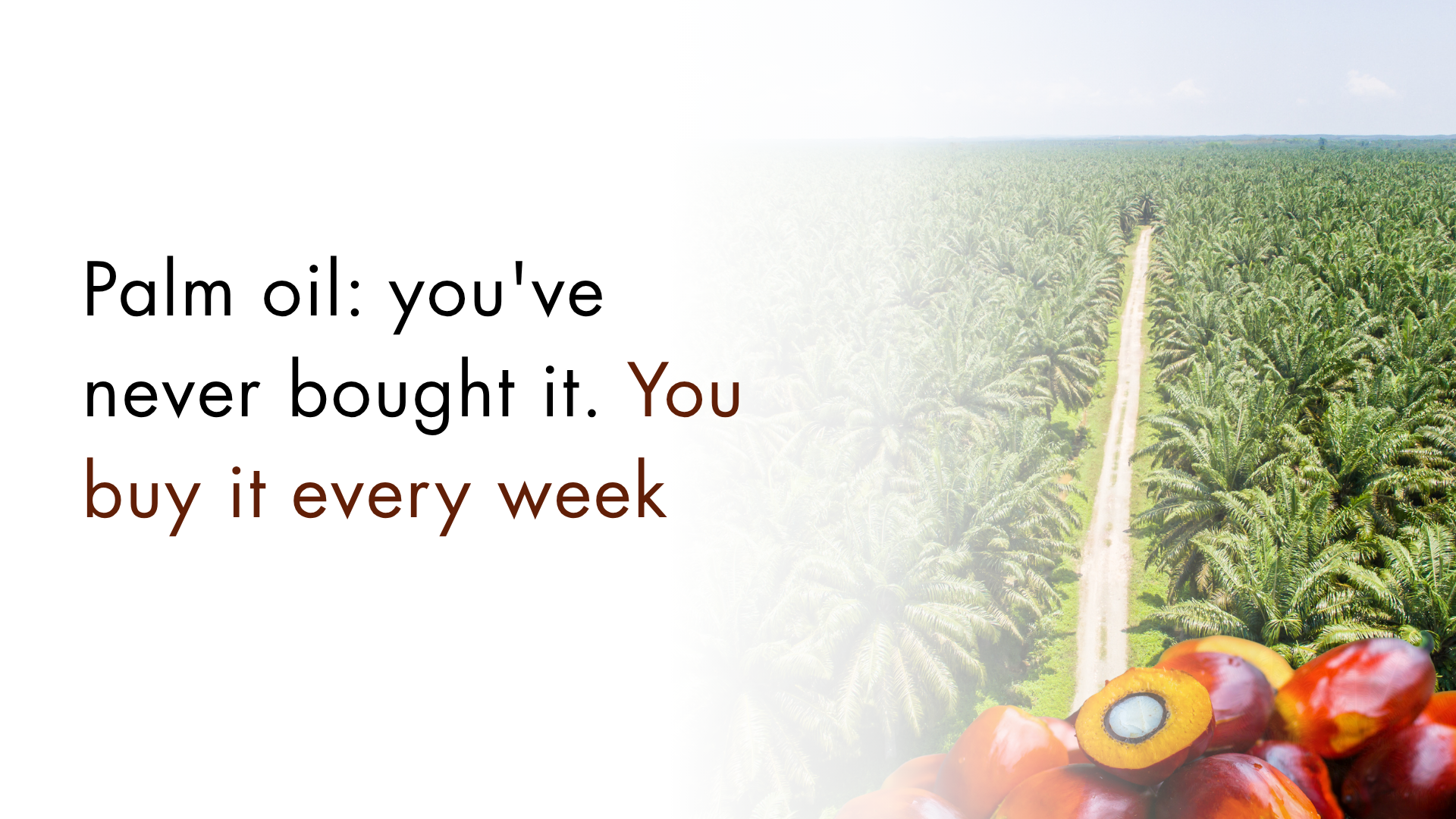
Twenty-One Of Twenty-Four Are Palm
Of the 24 formulas I could actually read, 21 are palm oil soap. That's what "sodium palmate" and "sodium palm kernelate" mean when you see them leading an ingredient list.
Is palm oil soap bad soap? No. It washes you perfectly well.
But here's what stopped me: of all those palm bars, the only ones that tell you anything about where the palm comes from are the small newcomer brands. The household names — the bars that have been in Australian bathrooms for a century — disclose nothing. Not certified, not uncertified. Just "sodium palmate," and good luck to you.
Nobody had to hide anything. They just had to not mention it.
Four Are Beef Fat
"Sodium tallowate" is rendered beef fat, saponified. It's how Australian soap was made for generations — my grandmother's soap was tallow soap.
I have no quarrel with tradition. I have a quarrel with the front of the box, which says things like pure and gentle and somehow never finds room for made of beef fat.
If you're vegetarian, you've possibly been washing with cattle for years.
Nobody told you.
And Some Bars Are Both. Depending On The Batch.
Which brings us back to that letter.
Three bars in the aisle — including the supermarket's own-brand "Pure Soap" — are listed with two alternative formulations. This is a direct quote from the retailer's own product listing:
"The product has a palm-based formulation as above if the batch code is in XXXXP format… a tallow-based formulation as above if the batch code is in XXXXT format."
Read that again. The manufacturer runs both recipes — plantation or abattoir, whichever suits that production run — and the disclosure lives in a batch stamp on the underside of the box, translated only in the fine print of a website product listing.
That's not labelling. That's a riddle.
The Oil That Isn't There
Here's the finding that surprised me most, and it's an absence.
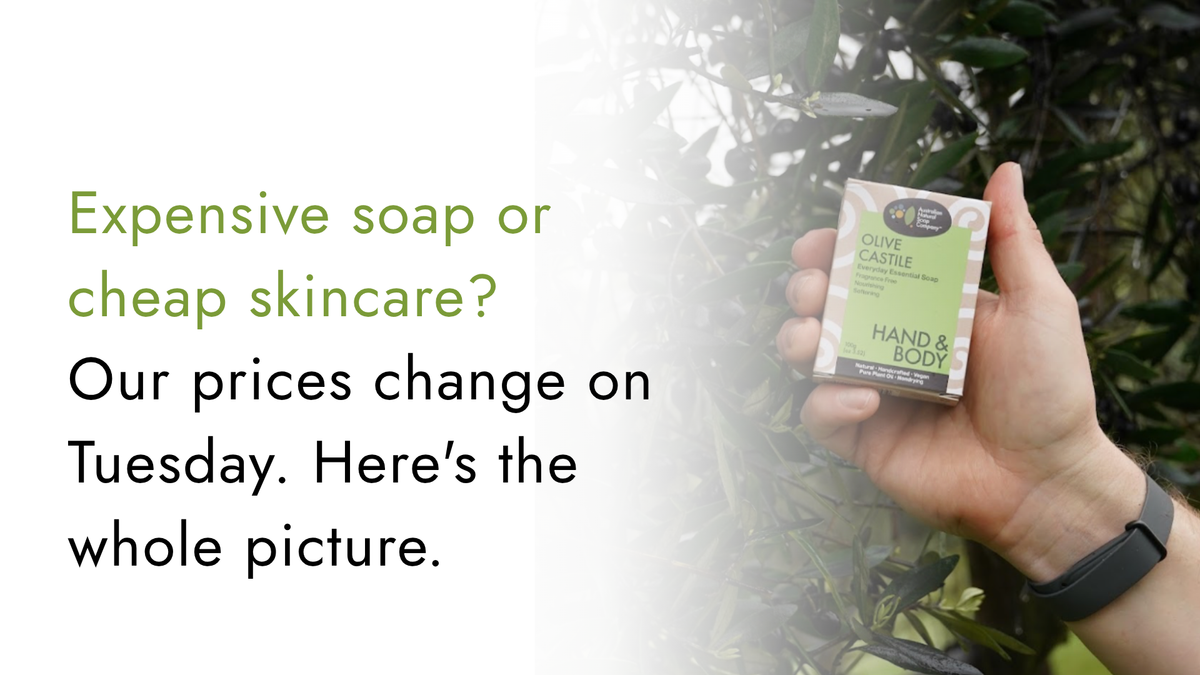
The number of bars in that aisle made on olive oil — the base castile soap has been made from for a thousand years, the gentlest place a bar of soap can possibly start — is zero.
Not one.
An entire aisle of the cheapest possible fats, dressed up in words like pure and natural and gentle, and the actual gentle option simply isn't on the shelf.
The Rest Of The Labels
Briefly — they deserve their own posts.
I found other things in that aisle. A "sorbolene" bar — the word Australians use as shorthand for gentlest possible — with sodium lauryl sulfate in it. A famous bar that proudly says it's not soap, and is telling the truth: it's synthetic detergent. A "hygienic" acne bar still carrying an antibacterial the US FDA banned from over-the-counter washes in 2016. Titanium dioxide in fifteen formulas, synthetic fragrance in twenty-two, and dyes with names like Acid Red 33.
And eight products — a quarter of the aisle — that publish no ingredient list online at all.
Each of those is its own story. I'll tell them properly, one at a time.
What I Actually Think
None of this will poison you. I want to be straight about that — the soap aisle is legal, regulated and safe, and I'm not interested in frightening anyone.
But there's a difference between safe and honest.
When I make a bar of olive castile, the label says saponified Australian olive oil, water, salt. When something is in the bar, it's on the label, and when it's on the label, you can find out where it came from. That's not a marketing strategy. That's just what a label is for.
The aisle runs on a different principle: tell them what's legally required, in the smallest words possible, on the least-read surface of the box.
A batch code shouldn't be a secret. A vegetarian shouldn't need a decoder ring.
That's a choice the industry made. It made it quietly, one omitted word at a time.
Next time you're in the aisle, turn the box over. If there's a letter on the end of the batch code — now you know what it means. You're welcome to be as annoyed about it as I am.
How we did it: the bar-soap range sold by a major Australian supermarket online, August 2026, excluding third-party marketplace listings. 34 products in scope; ingredient lists obtained for 26 (24 distinct formulas) from the retailer's published product data and brand websites. No brands named; every claim is quoted from or tallied against those published lists, and we keep the records. Products with no published list are excluded from every count.