When "Australian Grown" Isn't Rocks In The Turmeric
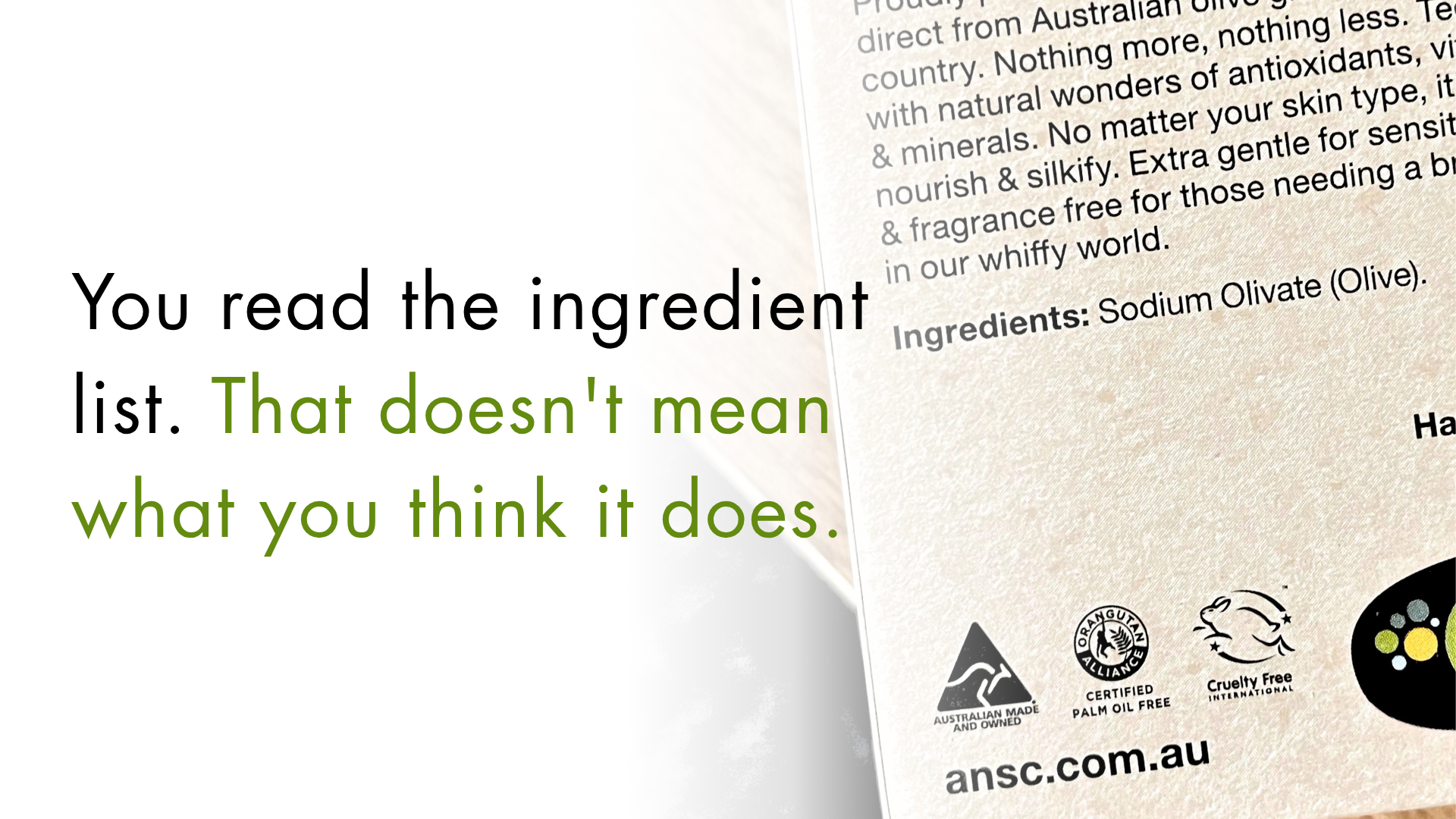
There's No Definition of "Natural" — Here's What I've Learned in 13 Years of Making Soap

That's the detail that'll stick from the Four Corners investigation this week — a yellow powder sold as pure, found to contain iron oxide, which the forensic lab described as essentially crushed-up rock. Added for colour. Added for weight.
There was more. Tomato paste labelled Australian grown that traced back to Chinese tomatoes — 27 of 33 Leggo's products tested. Cage free eggs from a Woolworths brand in South Australia that came back, carton after carton, as eggs from caged hens. Half the frozen white fish sold to restaurants as Australian was likely from Vietnam. Every company named disputes the findings, and the full investigation is worth your time.
But the reaction everywhere has been the same. How could this happen?
I want to ask the opposite question.
Why did we think it wasn't?
Nobody was looking
Of all the food imported into this country, honey is the only one routinely tested for adulteration.
One product.
At five per cent.
Contaminant testing at the border has gone backwards since 2019. Responsibility for policing the food supply is split across four or five agencies, and not one of them has the job of looking for fraud. The system was built to catch food that's unsafe.
Not food that's lying.
So when eight months of forensic testing turns up rocks in the spice jar, the honest response isn't shock. It's arithmetic.

Now think about this
Food is the regulated category.
Food has mandatory country-of-origin labelling. It has standards, and inspectors, and a consumer regulator that can act when a claim is false. That's the part of the supermarket with all the machinery in it.
That's where they found the rocks.
So let me tell you about mine.
There is no definition of "natural"
I've been making soap for thirteen years.
In Australian cosmetics, there is no legal definition of the word natural. None. It isn't a standard you meet or fail.
It's a word you print.
Cosmetics don't sit under the country-of-origin rules that cover food. Ingredient lists are required, and they're genuinely useful — but an ingredient list tells you what's in something. Not where it came from. Not how it was grown. Not whether the words on the front of the pack have any relationship at all to the contents.
If a company wants to tell you a product is natural, or pure, or clean, nobody is going to stop them.
There's nothing to breach.
I've watched brands appear, make claims I know to be untrue about products whose ingredients I can read, and sell a great many of them.
Nobody checked.
Nobody was ever going to.
Where palm oil hides
This is the clearest example I can give you.
Palm oil rarely appears on an ingredient list as palm oil.
It shows up as sodium palmate. As glyceryl stearate. As stearic acid — ingredients that are frequently palm-derived and never required to say so.
So a product can be labelled natural, look every bit of it, and be substantially palm oil.
And you'd have no way of knowing from the packaging.
The only reason I know where our oils come from is that we buy direct from producers, ask every single time, and keep the paperwork.
That's not a virtue. It's the only method available.
There's no register to check.

What a logo is actually worth
We hold three certifications, and I want to be exact about what each one does. In a piece about claims nobody verifies, I'm not going to make a loose one of my own.
- Leaping Bunny, run by Cruelty Free International. Animal testing. Audits the supply chain, not just the finished product.
- Australian Made — the green and gold kangaroo. Licensed, with rules about what actually qualifies.
- Orangutan Alliance, which certifies palm oil free.
Each of them costs money. Each takes time. Each involves someone external going through our documentation.
That's the entire point.
A logo is worth exactly the audit sitting behind it and not a cent more.
Which is also why so many badges on packaging are worth nothing at all. Plenty of them are self-awarded.
There's no rule against that either.

And now one of them is closing
Orangutan Alliance is shutting down.
Sit with the shape of that for a second.
Of the three things we pay to have verified, the one covering the ingredient with the worst environmental consequences and the best hiding places on an ingredient list is the one that couldn't sustain itself.
Not because it failed at the job.
Because there's no money in verification, and no requirement for anyone to hold it.
A small organisation was doing work that a government body should arguably have been doing all along. When it's gone, nothing replaces it. Not a regulator. Not an industry body. Not a competitor.
The work just stops.
And the only people who'll notice are the handful of brands who were paying for it.
Mandatory palm oil labelling has been argued about in this country for well over a decade. Industry has opposed it consistently — on cost, on trade complexity, on all the reasonable-sounding grounds that add up to no.
It still hasn't happened.
Nobody had to campaign Orangutan Alliance out of existence. That's the part that keeps circling back on me. There was no fight.
It just wasn't worth enough to enough people to keep it alive.
The bigger question
One of the food fraud experts in the investigation estimates that around ten per cent of what goes in your trolley is affected in some way. She's upfront that reliable figures are impossible to get.
That's rather the point.
Nobody is measuring it. So nobody knows.
The UK has a National Food Crime Unit. The EU runs cross-border fraud alert networks. Australia has neither, and the experts interviewed are all saying the same thing — someone needs to be looking.
I'm not writing this to tell you our soap is good.
I'm writing it because I've spent thirteen years inside a category with almost no labelling rules at all, and the thing that shocks me isn't that some companies lie.
It's that we've collectively decided nobody needs to check whether they do.
And that when the small outfits who volunteered to do it anyway go under, we let them.
That's a choice.
We made it by not making it.