Your skin is the last thing to know it’s spring

You notice it in the shower, before you notice it anywhere else.
One morning in early September, you reach for the tap and don't turn it as far. The water that felt merciful in July is suddenly too much. And a few days after that, standing at the mirror, you find your face has gone shiny by lunchtime while your shins are still flaking like it's the middle of winter.
Oily and dry. At the same time. On the same body.
That's not you imagining things, and it isn't your skin being difficult. It's two clocks running at different speeds.
Two Clocks
Your skin makes oil on the weather's schedule. When it's cold, it makes less — the glands slow down with the temperature. When things warm up, they pick straight back up again, and they do it quickly, because all they're really responding to is heat.
The barrier is the slower clock. That's the outer layer of your skin — the part that holds water in and keeps everything else out — and after three months of dry air, heating and long hot showers, it is thinner and more depleted than it was in April. It doesn't rebuild in a week. It rebuilds gradually, over weeks, and only if you let it.
So spring hands you a specific and slightly ridiculous combination: the oil is back, and the barrier isn't. More surface, less protection. That's the in-between feeling. It has a mechanism, and the mechanism is why it passes.
The Season The Beauty Industry Waits For
Now look at what the shelf sells you in September.
Renew. Refresh. Reset. Spring clean. Resurface. Scrubs, acids, clays, brushes — a whole aisle built on the idea that winter left something on you that has to be taken off.
I understand the appeal. It's the same instinct that makes you throw open the windows and wash the curtains.
But read it against those two clocks. The thing the marketing is pointing at — the shine, the unevenness — is your skin's oil arriving before its barrier is finished. And the fix on offer is to strip it. You would be taking a wire brush to the one thing that is still repairing.
Spring is not the season to clean your skin harder. It's the season to stop interfering with it.
What Actually Helps Is Boring
Less. Gentler. Every day.
Here's the bit that makes real soap different, and it's a genuine quirk of how it's made. During saponification — the process that turns plant oils into soap — glycerin is produced naturally as a by-product. In commercial body wash, that glycerin is extracted and sold on, because it's worth money on its own. In a cold-process bar, it simply stays where it formed. Glycerin is a humectant: it draws moisture toward the skin rather than pulling it away.
That's the whole trick. Not an added ingredient. A thing that was already there, left alone.
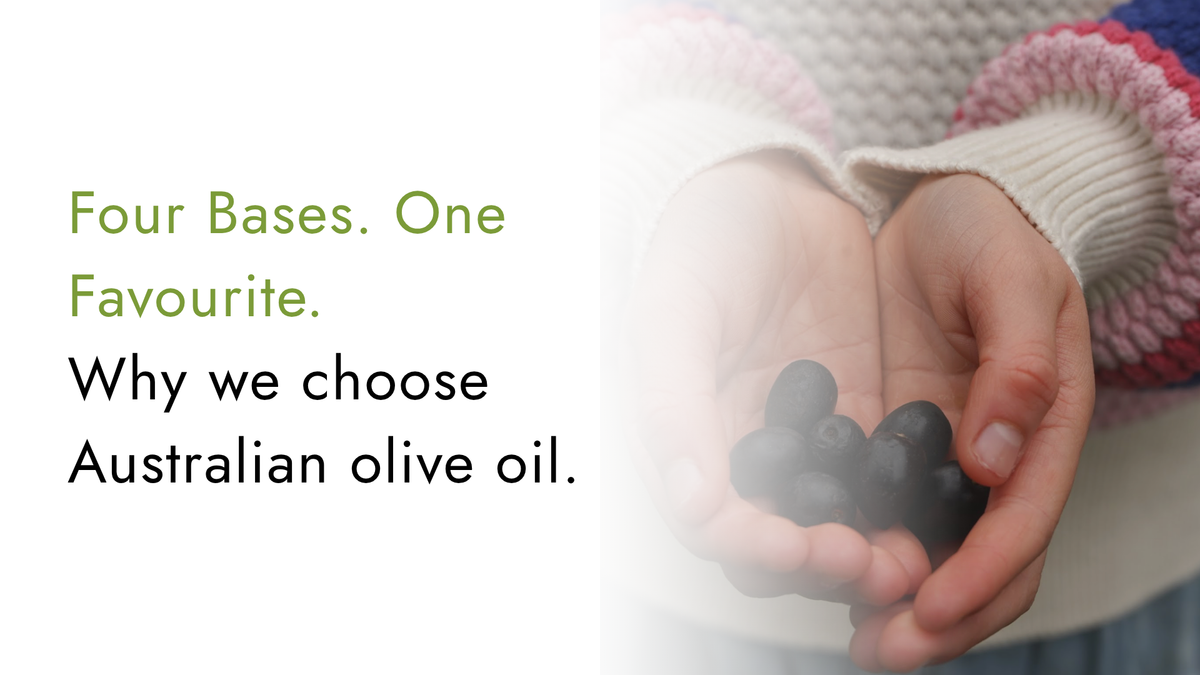
Ours are made from 100% pure plant oils saponified, predominantly Australian-grown, palm oil free, cured for four to six weeks, with no synthetic detergents and no sulphates. Wrapped in packaging that's home compostable. Nothing about that is clever. It's just the recipe, and it's the recipe that suits a barrier which is still putting itself back together.
Which brings me to the part of this I actually wanted to write about.
Why We Spent So Long On The Smell
Two reasons, and only one of them is the obvious one.
The first: the scent is an ingredient. On most body wash it's a single word on the back of the bottle — fragrance, or parfum — standing in for a blend that doesn't have to be broken down for you. On ours it's a list of named oils you can read, count and look up. The front of a pack and the back of a pack are written in two different languages, and only one of them is under oath.
The second reason is less obvious and, I think, more important. Looking after skin in spring is a daily job, done everywhere, for weeks. Chest, back, behind the ears, the bits a quick shower misses. And nobody does a daily job they don't enjoy. A soap you actually reach for is a soap you actually use — so the smell isn't decoration sitting on top of the skincare. For something you use every single day, it's part of whether the skincare happens at all.
How A Scent Is Built
Here's something thirteen years of doing this teaches you, and it isn't what most people assume.
Scents have layers. The top note is what hits you first — bright, sharp, immediate, and gone quickest. The heart is what sits underneath and holds: rounder, greener, herbaceous. In perfume there's a third layer, the base — resins, woods, the heavy things that keep a scent on your skin for hours.
Soap has almost no base.
That's not a shortcoming; it's the nature of the thing. A bar is a fast, hot, wet, brief encounter. What it has instead is bloom — steam and hot water lifting the whole scent at once, so a bar smells like one thing in the wrapper and something much bigger in the shower. Anyone who has opened a soap, sniffed it politely and then been surprised in the shower has met the difference.
So a collection like this isn't six smells picked because they're nice. It's a palette: a bright register, a green one, a grounded one, and bars built to bloom.
The Six, In Three Pairs
The Bright Ones — Lemon & Lime, Mandarin & Rose

Citrus is all top note. It arrives first, and it leaves first, which is exactly what you want at seven in the morning.
But lemon and mandarin are not the same animal, and this is the distinction I'd most like you to hear. Lemon and lime are sharp, high and a bit electric. Mandarin is rounder, sweeter, warmer — juice rather than acid. Put mandarin next to dried rose petals in an olive oil base, and you get something floral that never tips into perfumed. Put lemon next to lime, and you get a bar that wakes you up whether you asked it to or not.
The Green Ones — Eucalyptus, Peppermint & Lavender / Lemongrass & Poppyseed

The heart register. These hold longer than citrus, and they read as clean rather than sweet.
Eucalyptus and peppermint are both fast and cold — the crisp hit and the cool edge — and lavender is what stops them from being merely bracing. It sits underneath and softens the whole thing. Three oils that become a fourth thing; none of them is on their own, which is the part of blending that never stops being satisfying.
Lemongrass gets mistaken for lemon and is nothing like it: greener, grassier, more herb than fruit. The poppyseeds worked through the bar give you texture as you wash.
The Grounded Ones — Wattleseed, Kunzea

The closest thing a bar of soap gets to a base note, and both of them are Australian.
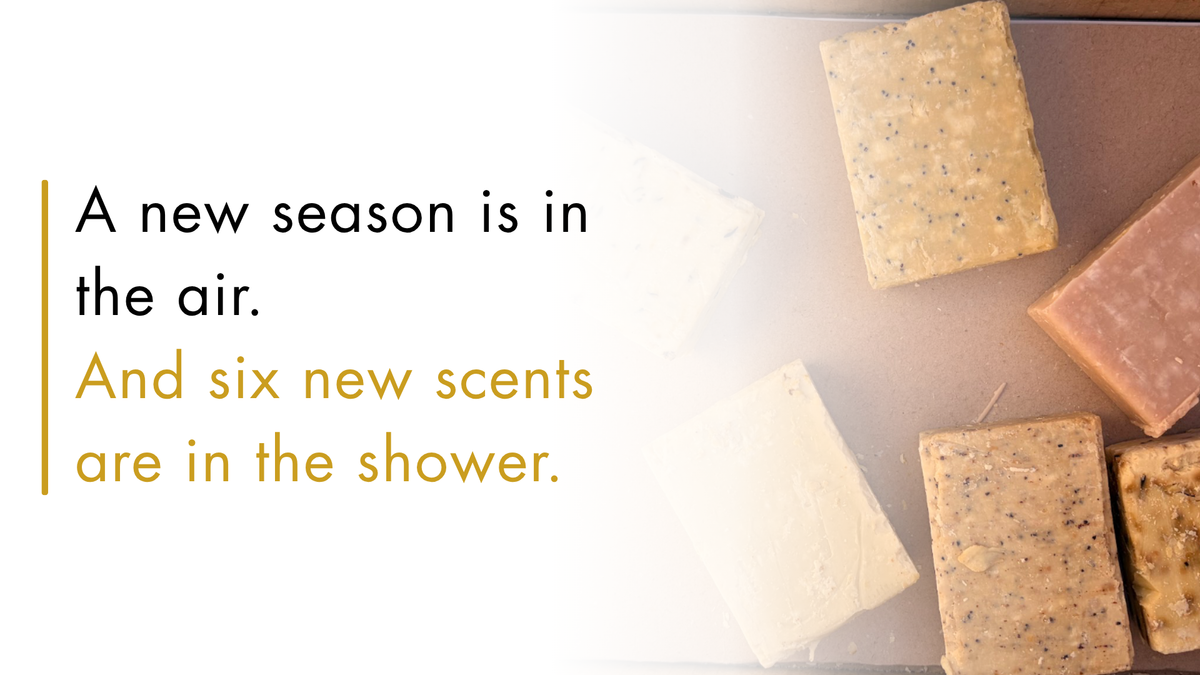
Wattleseed doesn't shout. It's earthy and nutty and quiet, folded through an olive oil base as a powder, which also gives the bar its speckle and a gentle scrub as you wash. It's the one for people who don't actually want their bathroom to smell of anything much.
Kunzea is the one nobody's heard of, which is most of why we love it. Native, fresh, herbaceous, sitting alongside sweet orange, with dried kunzea leaf running through the bar so you can see the plant it came from. It smells like being outside.
Six Bars, Three Registers
Which is why the full Spring Edit is one of each rather than a discount with a bow on it.
Something bright for a morning you're dragging. Something green and cool for a head full of pollen. Something grounded for the end of a long day. You're not choosing a favourite — you're keeping a small range on the shelf and matching the bar to the morning, which is a more interesting way to wash than picking one smell and staying there until the bar runs out.
Wattleseed. Lemon & Lime. Mandarin & Rose. Kunzea. Eucalyptus, Peppermint & Lavender. Lemongrass & Poppyseed. One of each, twenty per cent off, for as long as the run lasts.
Before You Go — One Thing, Tonight
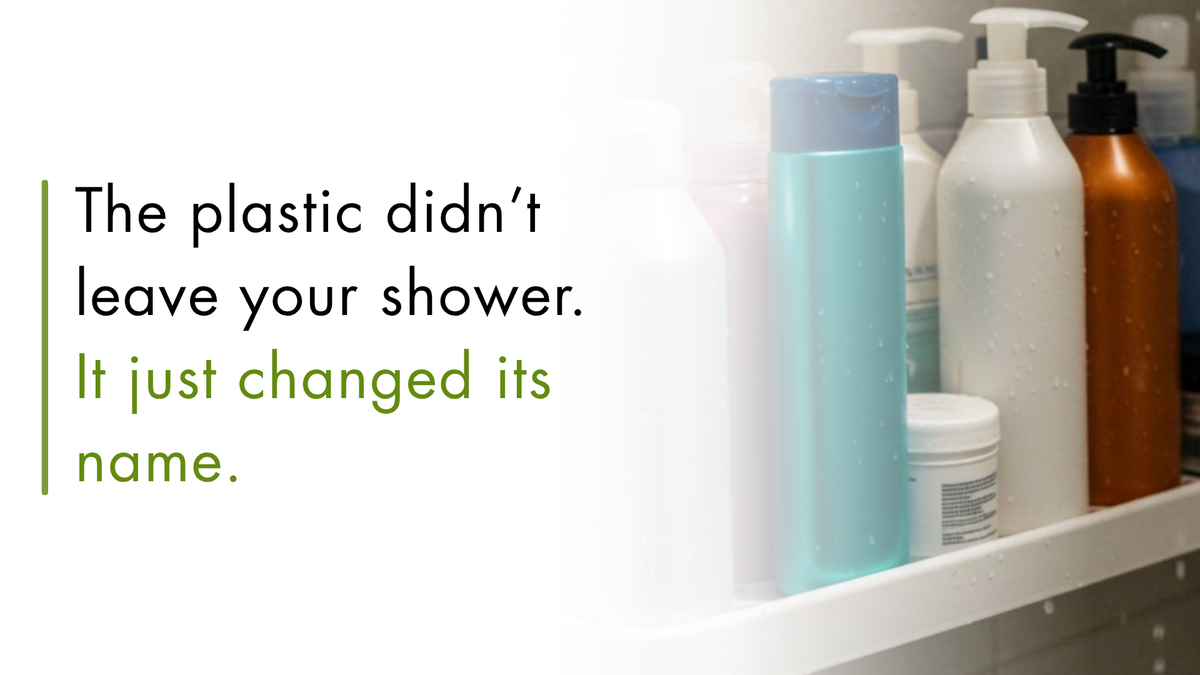
Pick up whatever is currently in your shower and turn it around.
Find the word fragrance, or parfum. Notice that it's one word. Notice that everything else in that list had to be named, and that one didn't.
Then read ours. It won't take you long — there isn't much on it.
Real soap. Real scent.