Who Should Be Doing The Cleaning Up
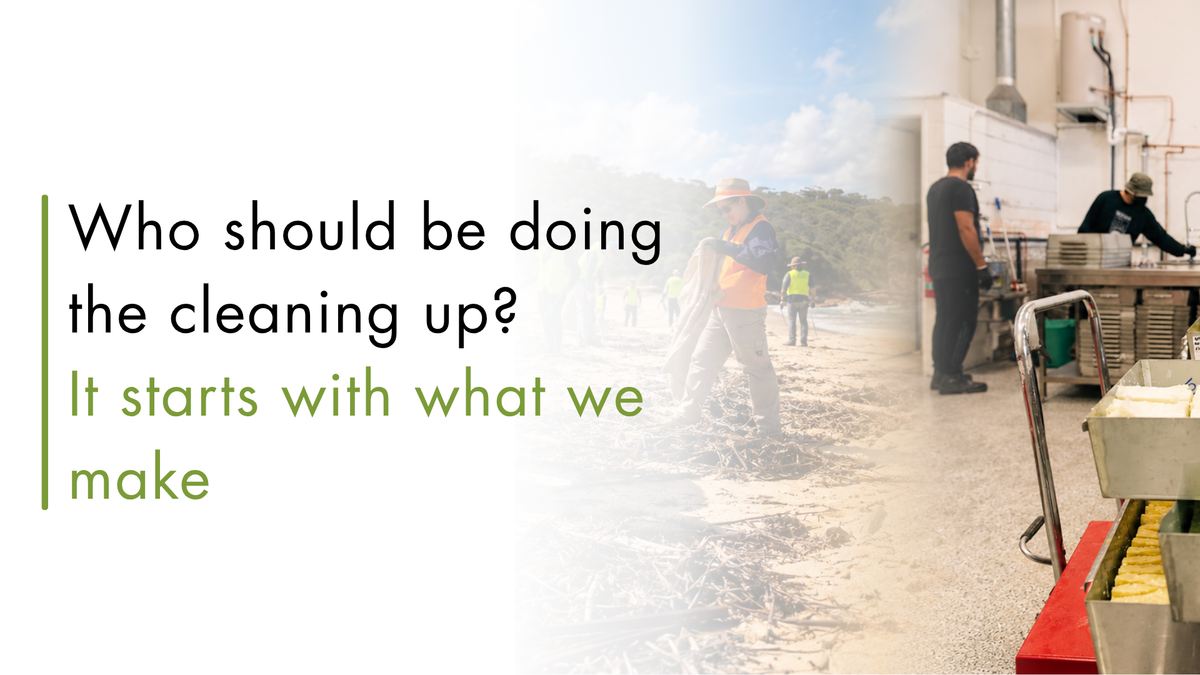
On Sunday it's World Cleanup Day. Last year 25 million people in 190 countries gave up a morning to walk a beach or a creek or a park with a bag in one hand, picking up things they didn't drop. They did it because they love the place they live, and I think it's one of the better things we do as a species. If you're one of them this year, thank you.
But I want to ask a question this year, and I want to ask it plainly.
Why is it us?
What's In The Bag
Clean Up Australia counts what its volunteers collect here, and the answer barely changes from one year to the next. Plastic is about 80% of everything picked up. The two most common items are soft plastic wrappers and cigarette butts. I'd be surprised if the bags look very different on any other coastline.
Not one of those wrappers was made by the person who bent down for it. Not one of those butts was designed by the person who fished it out of the sand. Every single item in the bag began as a decision in a boardroom or a factory: what to make, how much of it, what to make it out of, and what would happen to it afterwards. The people who made those decisions will not be at the beach on Sunday. They'll be at work, making more.
Where The Idea Came From
Here's the part that took me a while to learn, and I think it changes how you see the bag.
In 1953 the American state of Vermont banned throwaway drink bottles. The following year a group of executives formed an organisation to fight back — men from the companies that made beer, cans, bottles, soft drinks, chewing gum and cigarettes, led by the president of the American Can Company. They called it Keep America Beautiful. By 1957 Vermont had let its bottle law lapse.
In 1971 that same organisation put a television advertisement to air on Earth Day. A man in Native American dress paddles a canoe through a polluted river, walks to a highway, and a bag of rubbish thrown from a passing car lands at his feet. A single tear rolls down his cheek. The line at the end:
"People start pollution. People can stop it."
It's one of the most famous advertisements ever made, and its job was to move a problem. The companies making the throwaway packaging paid to tell you that the litter was your fault. Not the making of it — the dropping of it. Personal responsibility, as an idea about rubbish, was itself a product, and it was manufactured by the people with the most to gain from you believing it.
Fifty-five years later we are still living inside that advertisement. It's on the side of the pack: please dispose of responsibly. It's in every campaign that asks you to do better, and never asks the maker to make less.
It Hasn't Stopped
Fast fashion is the example everyone reaches for, and fairly. Australians bought 383,000 tonnes of new clothing in a single year — about 56 items each — and a great deal of it was designed to be worn a handful of times and forgotten. Europe has at least started asking the makers to answer for it: under its new sustainable products rules, large companies have to publish every year how many unsold products they discard and why, and destroying unsold clothing and shoes is banned outright. Nobody asks that of a company selling in Australia.
So the question for Sunday isn't who dropped this. It's who made it, why did they make so much, and why did they make it out of something that will outlive all of us? Those are questions for manufacturers, and I'm one. So let me answer for us.
Our Spring Clean
Ours happened a fortnight ago, in the Dandenong warehouse, with Ben counting shelves.
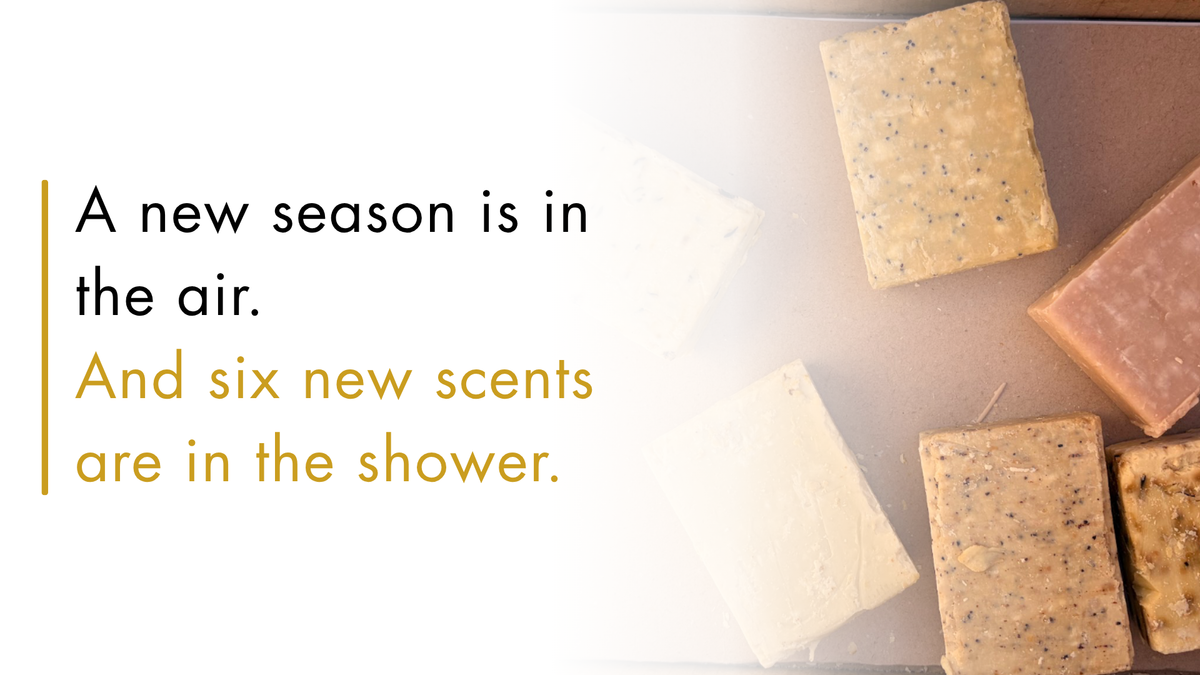
What he found was soap. More than we needed, because we read the year wrong — shampoo bars, the Laundry & Stain bar, the Dog Shampoo, a few cleansers — and some lines we've decided not to make again, because a good soap that too few people buy is still a soap nobody's buying.
What he didn't find was waste. Not in the sense a clothing warehouse would mean it.
A bar of cold-processed soap keeps happily on a shelf; it gets harder and milder the longer it cures. The box it comes in goes in your compost. The offcuts — the trimmed ends and odd shapes from every batch — get crushed into our Soap Flakes and sold for laundry and dishes. In thirteen years we have never made a thing we couldn't offer to someone.
I want to be honest that we didn't design that. We didn't sit down in 2013 and draw a circle on a whiteboard. We decided to make soap out of plant oils and nothing else, to put it in a box that could go back into the ground, and to never put anything in the bar your skin didn't need. We made those decisions because they were the ones we could live with, not because they were the profitable ones. Thirteen years on, it turns out that if you make things that way, there's very little to clean up. The circle drew itself. I find that beautiful, and I don't think it was profit that drew it.
Profit doesn't draw circles. It draws a straight line — from the factory, to the shelf, to the bag in your hand on Sunday.
Maybe that's the answer to why it's us.
So, The Sale
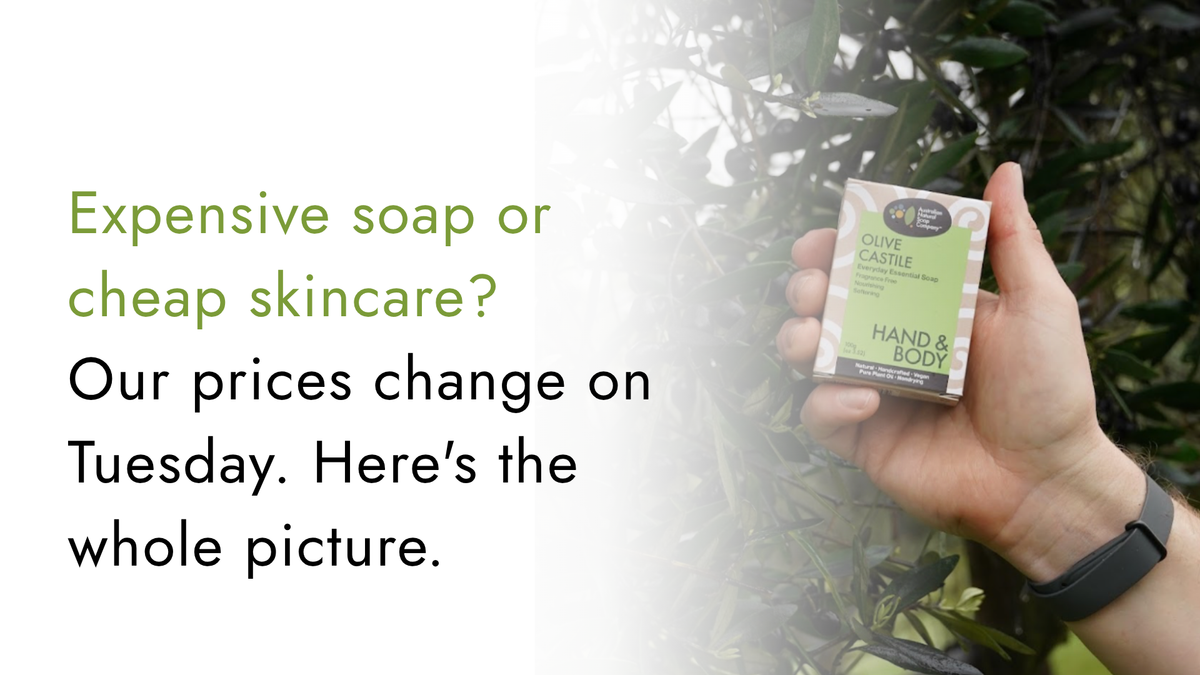
That's what the Spring Clean-Out is: our clean-up, done the only way we know how, which is to sell you the soap rather than pretend it isn't there. It's on now — 30% off selected stock, some of it we won't be making again. Olive Castile, Kunzea and the new perfumes aren't in it, and I've written before about why we don't discount the bar people love most every time we need a lift. There are a hundred mystery boxes too — about $55 of soap for $38 — and when they're gone, they're gone, because I watched them being counted.
If there's a bar on that page you've been meaning to try, this is the weekend. And on Sunday, when you're out there with the bag, I hope the question travels with you.
Sources: World Cleanup Day, 2025 participation figures (worldcleanupday.org). Clean Up Australia, Rubbish Report FY24 (plastics 80.7% of counted litter; soft plastics the most collected item) and FY25 headline (cigarette butts 23.6%). Australian Government DCCEEW, textile waste roundtable — 383,000 tonnes of new clothing bought in 2018–19, about 56 items per person. European Commission, Ecodesign for Sustainable Products Regulation — disclosure of discarded unsold products; destruction ban on unsold textiles and footwear. Ginger Strand, "The Crying Indian", Orion Magazine — Keep America Beautiful (founded 1954), Vermont's 1953 bottle law, the 1971 Earth Day advertisement.