What the triangle on your plastic actually means — and why the beauty industry relies on the confusion
·
·
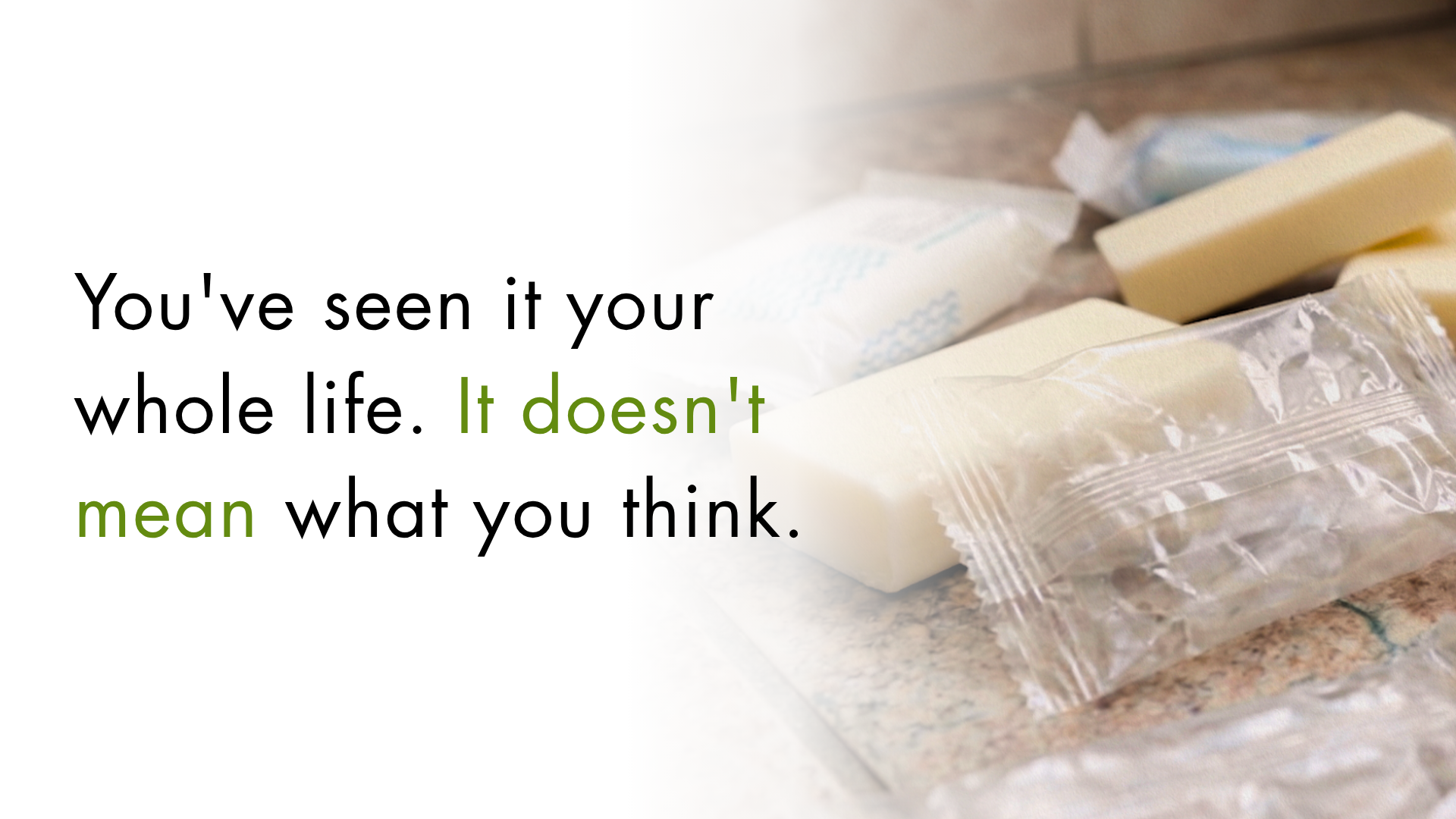
A supplier sent us a new packaging option last month.
A "recyclable" plastic pouch. Shiny. Lightweight. For soap offcuts and travel bars. The label said: widely recyclable.
I said no without much deliberation. The beauty industry has wrung every last drop out of the recyclable claim, and I know it.
But then I asked myself: can I actually explain why? Beyond instinct, beyond the vague sense that "recyclable" doesn't mean what it's supposed to mean — what's the real story?
So I went looking, the same way I did when I started digging into PFAS. [That piece is here if you missed it — it starts with a farmer, a cow, and a chemical company that knew what it was doing for decades before anyone found out.] This one starts with a symbol I've been looking at my whole life without ever really questioning it.
A Symbol Worth Actually Looking At
That triangle. Three chasing arrows. It's been on plastic since 1970.
Most people assume it means: this gets recycled.
It doesn't.
Here's what actually happened. The original chasing-arrows symbol was designed in 1970 as a genuine recyclability signal. Then, in the 1980s, plastic manufacturers started stamping a near-identical symbol onto their products. Same three arrows. A number in the middle. Completely different job: the Resin Identification Code. It tells manufacturers what type of plastic something is made from. Nothing about whether it can be recycled. Nothing about whether it will be.
Two symbols. Almost indistinguishable. One meant: this material can become something new. The other meant: this is plastic type 5.
The confusion wasn't accidental.
In 2020, NPR and PBS Frontline ran a joint investigation called Plastic Wars. Internal industry documents from the 70s and 80s. Three former plastics-industry executives speaking on record for the first time.
Lew Freeman, once VP of government affairs for the Society of the Plastics Industry: "There was never an enthusiastic belief that recycling was ultimately going to work in a significant way."
Larry Thomas, who headed the industry's main lobbying group through the late 80s and 90s: "If the public thinks the recycling is working, then they're not going to be as concerned about the environment."
They said that. Decades ago. While the industry kept funding the chasing-arrows symbol and telling the public the opposite.
The same investigation traced where a lot of that "recycled" plastic went after China stopped accepting the West's waste in 2018. It turned up dumped in Indonesian communities already struggling with their own.
It's the same playbook I wrote about with PFAS. Early internal knowledge. Public reassurance. Decades of delay.
So What Actually Happens to It?
The honest number is uncomfortable.
A widely cited 2017 study in Science Advances found that of all the plastic ever produced globally, only about 9% has ever been recycled. The rest is in landfill, in the environment, or has been incinerated.
The OECD's Global Plastics Outlook puts the current global recycling rate at a similarly bleak figure.
Australia does better. Nineteen percent of plastic packaging was actually recycled or composted here in 2022-23, according to APCO — the body responsible for tracking exactly this. The national target, set in 2018, was 70% by 2025. APCO has confirmed that target will not be met.
Nineteen percent. Against a target of seventy. Still a long way from the promise implied by a symbol that's been on every plastic bottle we've ever owned.
Then There's What We Can't See
Here's where it gets harder to sit with.
Plastic doesn't just sit in landfill. Out in the world, it breaks down. Into microplastics. Then nanoplastics — small enough to cross biological barriers.
In 2022, researchers published one of the first studies to find microplastic particles in human blood. Not in a river. Not in a fish. In us.
Two years earlier, another team found microplastics embedded in human placentas. On both the maternal and foetal side.
We're still learning what that means long-term. But the direction isn't reassuring. And it echoes something we already know from PFAS: once something this small and this stable gets into a bloodstream, or a placenta, it doesn't politely leave.
The Self-Declaration Problem, Again
Back to that pouch on my desk.
"Widely recyclable" is a label a supplier puts on something. There's no independent body confirming it travels from my customer's bin to an actual second life as something new. No guarantee the local facility even accepts that type of plastic — let alone processes it, rather than shipping it offshore or quietly landfilling it.
Same shape of problem as the PFAS declaration. A company tells you something is fine. You're trusting the tell, not the testing.
That doesn't mean every recyclable claim is deceptive. Genuine recycling happens, for some materials, in some places. But "recyclable" and "will actually be recycled" are two different claims. And packaging is rarely honest about the gap.
Why This Changes How We Pack Soap
Our soap already sidesteps the industrial chemistry problem. Oil, alkali, time. Nothing complicated to hide.
This made me look harder at our own choices — not to justify them, but to understand them properly.
Paper. Home compostable film where we use film at all. Nothing that depends on a customer's local council having the right facility, or a global recycling system that — on the evidence — mostly hasn't materialised.
It doesn't need to look recyclable.
It needs to actually go somewhere good.
The Bigger Question
I keep landing on the same thought I had with PFAS.
Why do I keep trusting symbols and declarations instead of asking what happens after the product leaves my hands?
The plastic story isn't only about litter or a bin with the wrong triangle. It's about a decades-long gap between what an industry knew privately and what it told the public — while a symbol did the reassuring for them.
We shouldn't need journalists and court documents to find out that "recyclable" mostly hasn't meant what we thought.
A label, like a declaration, shouldn't be the finish line.
Thanks for reading this far. These rabbit holes aren't always comfortable, but I'd rather know.
Soapy hugs,
Emma xx
Emma xx